Food & Tea Gifts
Pantry crafts: pryaniki, pastila and the heritage shelf
The only crafts on this site meant to be eaten: stamped gingerbread, whipped apple pastila and pantry traditions that survived their own consumption.
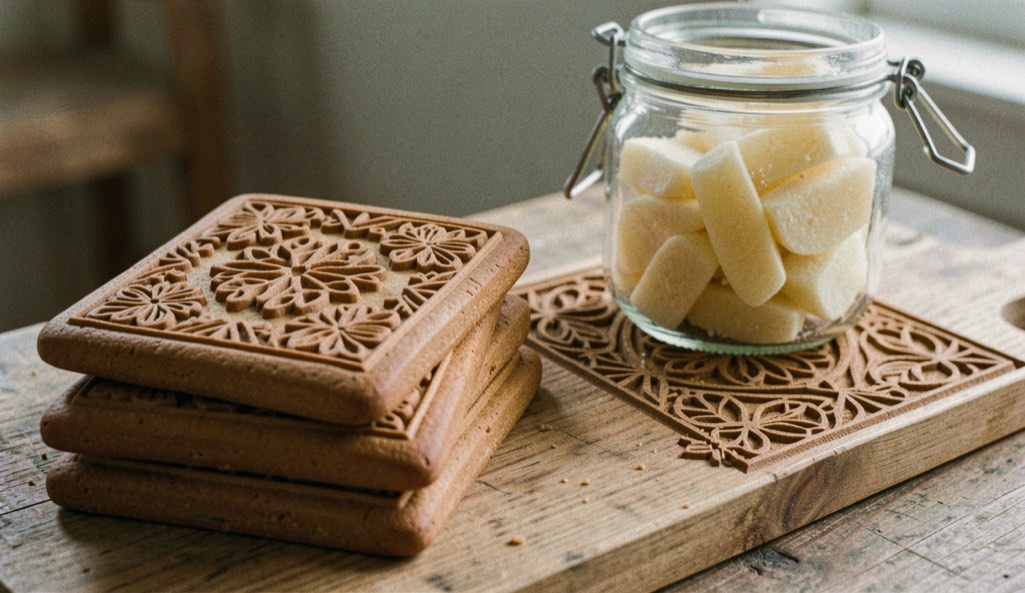
Every other craft on this site is meant to outlive its purchase; the pantry crafts were meant to disappear, and survived anyway. Printed gingerbread stamped from carved boards, apple pastila whipped in monastery towns, marshmallow light zefir and the fireweed tisane that predates the tea trade: these are foods with documented histories, regional identities and marks worth reading. They also behave differently from every other gift, because keeping them is part of judging them.
Tula pryaniki: bread that prints
The pryanik, honey spice bread pressed with a carved design, is documented in Tula from the seventeenth century, and the town made the form its monument. The method is sculpture turned to baking: a hardwood board carved in mirror relief, the dough pressed into it, the print transferred to the oven. Classic Tula pryaniki are rectangular, often made in matching pairs pressed from a two part board, filled with jam or condensed milk, and glazed to a shine that makes the relief read like a medal.
The boards themselves became collector objects: carved fruit, coats of arms, initials and celebration scenes, each design a small piece of vernacular relief carving. Confectioners still stamp by hand in Tula, and a genuine stamped pryanik carries crisp relief edges, an even glaze and a weight the industrial line does not bother with. The craft’s marks are edible, so to speak: the print itself is the signature, and the board is the plate it was signed with.
Pastila and zefir: air with a pedigree
Pastila is fruit whipped into structure. The classic apple pastila of Kolomna, a town southeast of Moscow, grew into a named industry in the nineteenth century, built on apple puree and egg white dried in layers in cool ovens; the trade faded and was famously revived by enthusiasts who reopened the history with the town’s museum. Belyov, another pastila town, worked the same territory with a monastery confectionery pedigree. The texture tells the story: a genuine layered pastila slices like a soft meringue and tastes of orchard, not of flavoring.
Zefir, the marshmallow like sweet built on the same apple puree and egg white base, is the modern descendant of the same family, and ptichye moloko, the bird’s milk souffle beloved of the Soviet confectionery era, joined the pantry in the postwar decades. Alongside them sit the older pantry trades: halva from the east of the empire, and Ivan chai, the fireweed tisane that was a Russian export drink before imported tea conquered the table, fermented leaf rolled like tea and dried for winter.
Reading the shelf as a collector
Food crafts are judged by origin and keeping, and the second half is where purchases fail. Genuine stamped pryaniki are dense, moist and best within days; industrial versions with long dates trade the board pressed charm for shelf life, and both facts are honest if priced. Pastila and zefir want cool, dry, sealed keeping and are at their best fresh; fireweed tisane keeps like tea, away from light and moisture, and shows its quality in the rolled leaf and the deep red brew.
| Craft | Documented origin | Sign of quality | Keeping class |
|---|---|---|---|
| Tula pryanik | Seventeenth century, board pressed | Crisp relief, even glaze, dense crumb | Days to weeks, sealed tin |
| Kolomna pastila | Nineteenth century apple industry | Layered slice, orchard flavor | Weeks, cool and dry |
| Zefir | Same apple and egg white family | Light structure, no syrup weep | Days, airtight |
| Fireweed tisane | Pre tea Russian leaf drink | Rolled leaf, deep red brew | Like tea, dark and dry |
Giving food crafts as heritage
The pleasure of the pantry crafts is that the story is consumed, and the objects that carry it survive: a carved pryanik board on a kitchen wall, a tin, a tisane jar, a recipe. That is the honest way to keep them as gifts, pairing the edible with its tool or its document, rather than pretending the gingerbread will outlive the winter. For anything regulated in modern trade, such as caviar, the honest advice of a heritage site stops at the label: certified sources, declared contents, and no romantic stories about documents that cannot be shown.
A collector’s checklist
- Buy stamped pryaniki for the relief, and keep them in a sealed tin, not a fridge.
- Judge pastila by the slice: layers and orchard flavor, not sweetness alone.
- Pair any edible gift with its surviving object, a board, a tin or a printed history.
- Treat long dates as a trade off, priced accordingly, never as quality.
Common mistakes
- Refrigerating pryaniki, which dries the crumb and dulls the glaze faster than the tin ever would.
- Paying handmade prices for machine lines, distinguishable by relief sharpness and weight.
- Giving perishable pantry crafts as keepsakes, and confusing the gesture with the object.
- Storing tisane beside spices, since rolled leaf takes the neighbor’s aroma within weeks.
The bottom line: the pantry crafts are heritage you eat, and they reward the same document first habit as every other guide on this site. Origin, keeping class and the surviving tool: know which of the three you are buying, and the gift always lands honest.