Section 03 of 06
Painted Crafts: Khokhloma, Gzhel and Lacquer
A brush, a kiln and three centuries: khokhloma’s fake gold, gzhel’s cobalt, and the miniature villages that never stopped painting.
- 03
- 3 guides
- The St. Petersburger desk
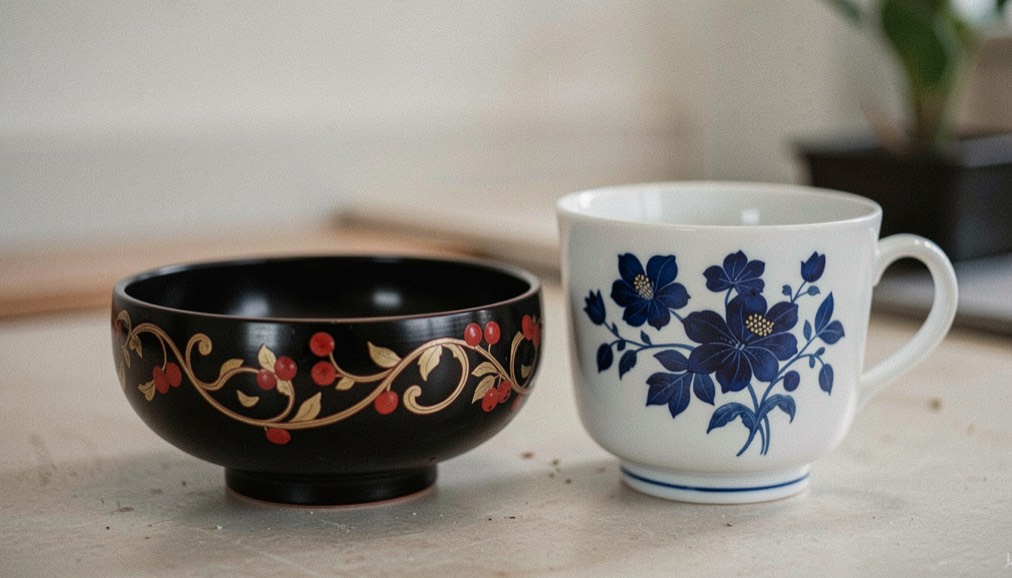
Paint is where Russian craft is most itself: a wooden spoon that pretends to be gold, a white cup that carries one shade of cobalt through a dozen tones, a papier mache box holding a fairy tale in miniature. Each of these traditions grew in a specific place, around a specific technical trick, and each trick leaves evidence on the finished piece.
Khokhloma shows its furnace work in the depth of its black, gzhel shows its kiln in the run of the cobalt, and the lacquer villages show their hands in brushwork that no printed transfer can quite fake. The guides read all three, and mark the line between painted and printed.
In this section
-
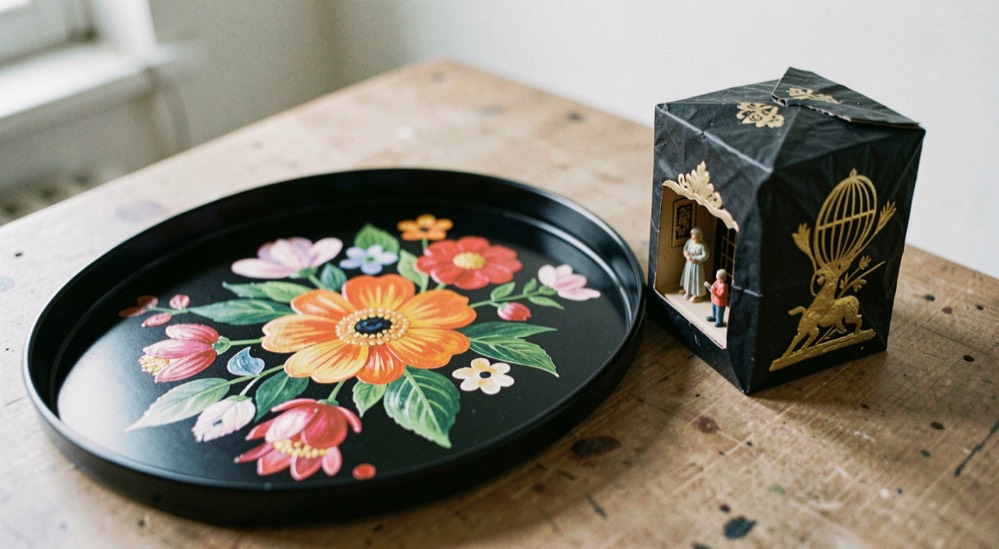
Painted trays and lacquer boxes: Zhostovo and the miniature villages
Two painted traditions on humble grounds: flowers on iron trays from one village near Moscow, and fairy tales in tempera on papier mache from four.
-
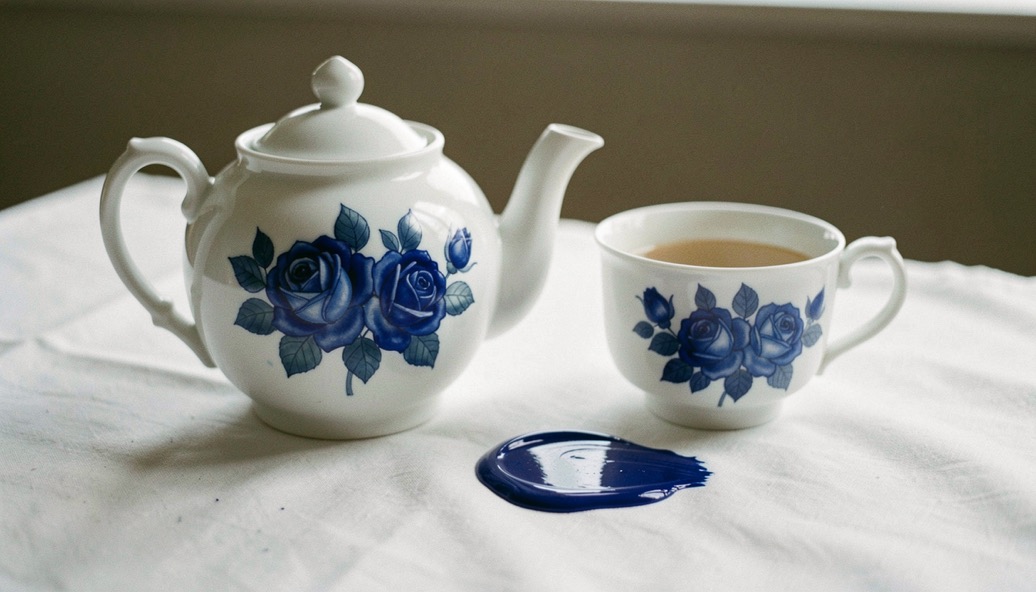
Gzhel: one cobalt, a dozen blues
The whole style is a single pigment handled like watercolor: cobalt on white, fired hard, and recognizable by a brushstroke no two of which match.
-
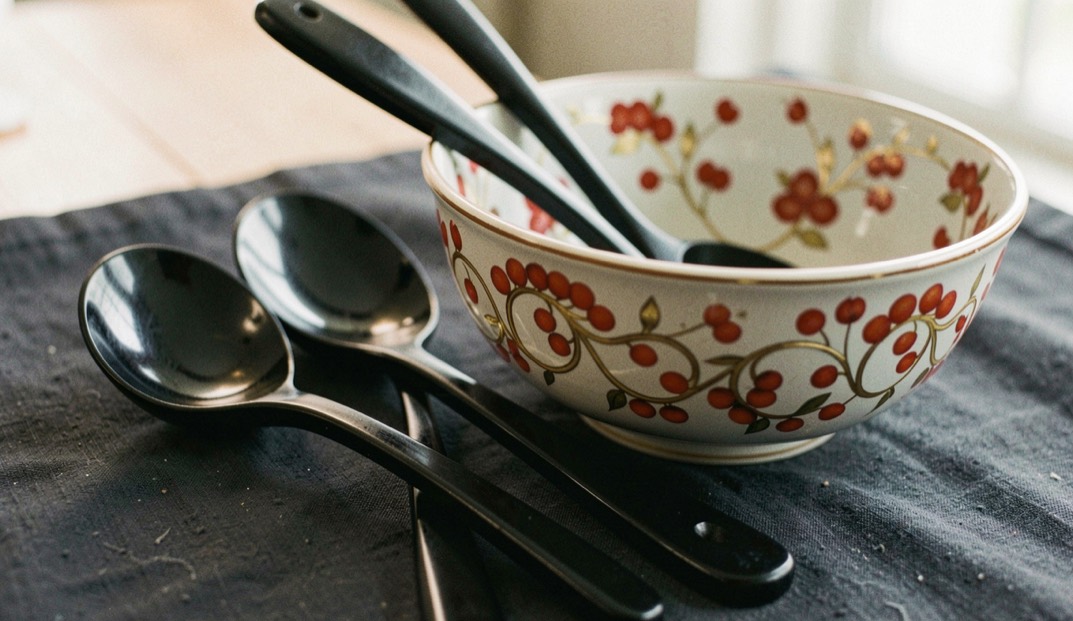
Khokhloma: how wood learned to shine like gold
No gold is used and everything shines: khokhloma is a chemistry trick, an icon painter’s inheritance and one of the great wooden crafts of Europe.
Two neighbouring sections continue the story: Matryoshka & Dolls and Amber & Jewelry. The recognition rules shared by every craft are collected in the guide to spotting fakes.